

Modulating metal
10 September – 6 November


10 September – 6 November
M-F. 10-14 | 16.30-20.30
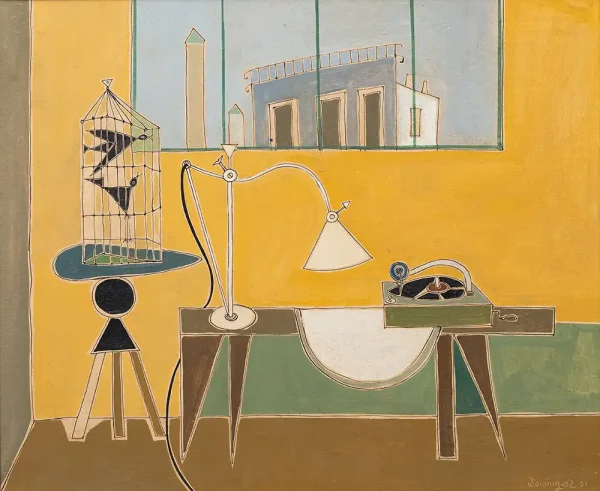
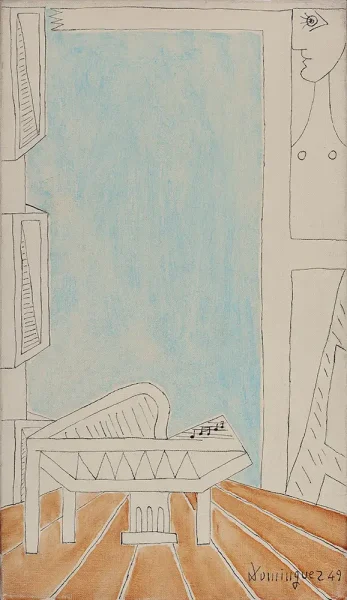
Galería Guillermo de Osma presents an important exhibition dedicated to Óscar Domínguez (1906–1957), offering a new perspective on one of the most internationally acclaimed Spanish artists of the 20th century and a key figure of Surrealism. The exhibition brings together around thirty works that revisit Domínguez’s distinctive and highly original artistic production.
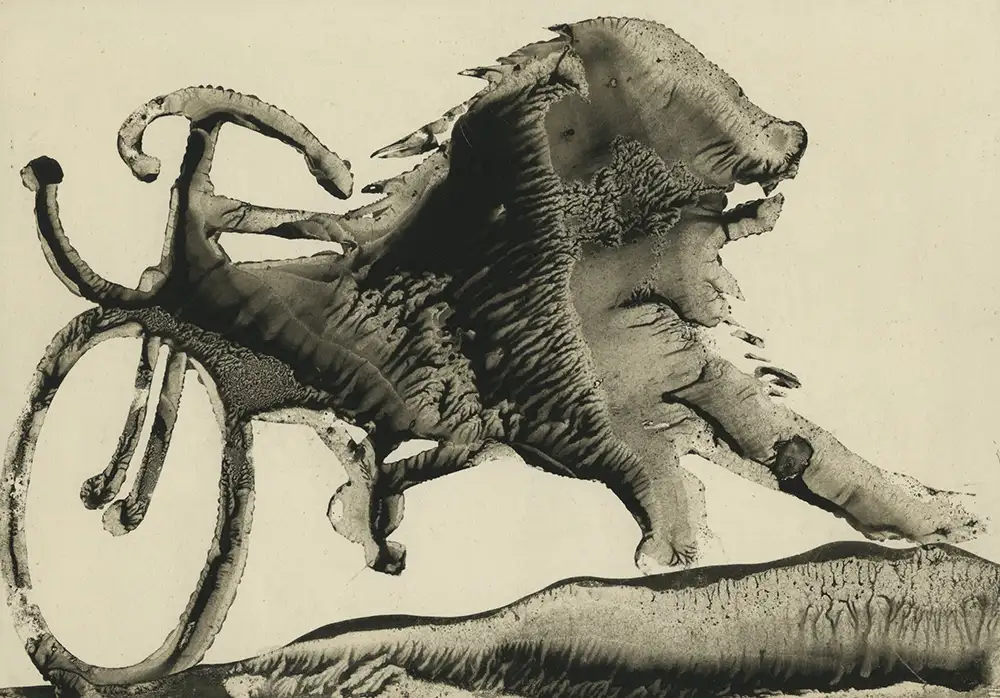
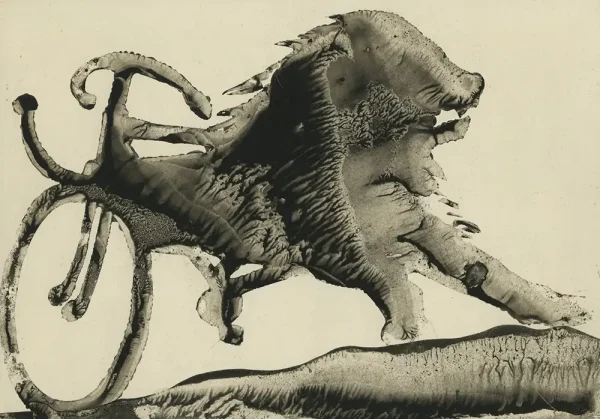
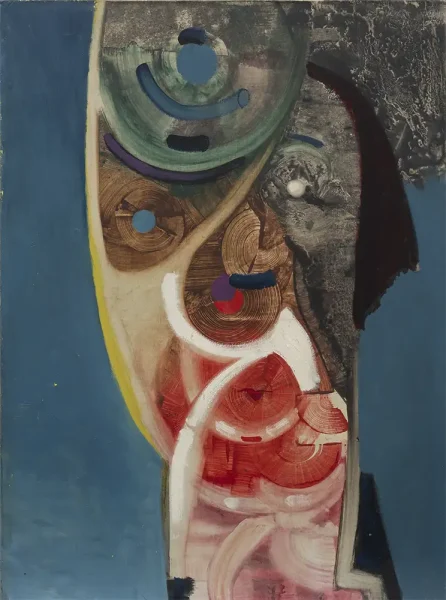
Domínguez developed a deeply personal visual language in which automatism, technical experimentation, continuously evolving metamorphosis, and an iconographic universe populated by hybrid figures, transforming objects, and an extraordinarily powerful poetic imagination come together harmoniously. His reinvention of Decalcomanía, subsequently adopted by many other artists, constitutes one of his most significant contributions to the Surrealist movement. The exhibition includes an outstanding group of decalcomanías, a technique through which Domínguez stood out in the circle of Surrealist artists, leaving part of the compositional outcome to chance. Among them are two works with a special historical importance: Lyon-Bicyclette. The other versions, all different, are held in the collections of MoMA, the Centre Pompidou, and the Reina Sofia Museum.
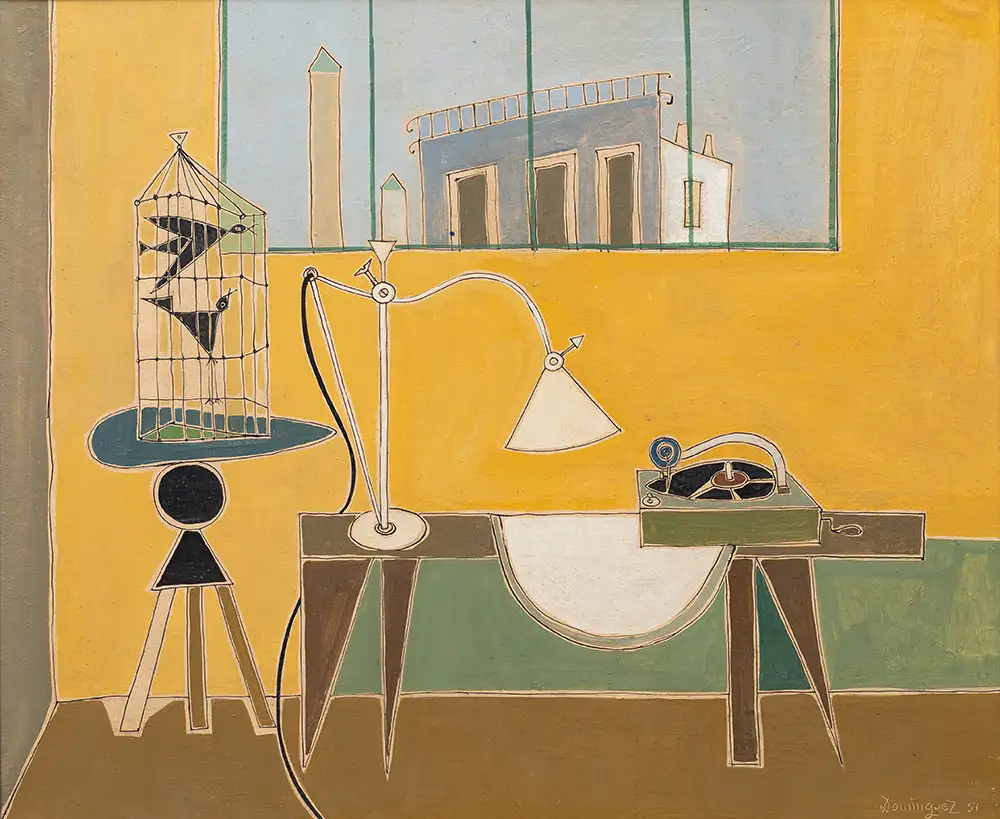
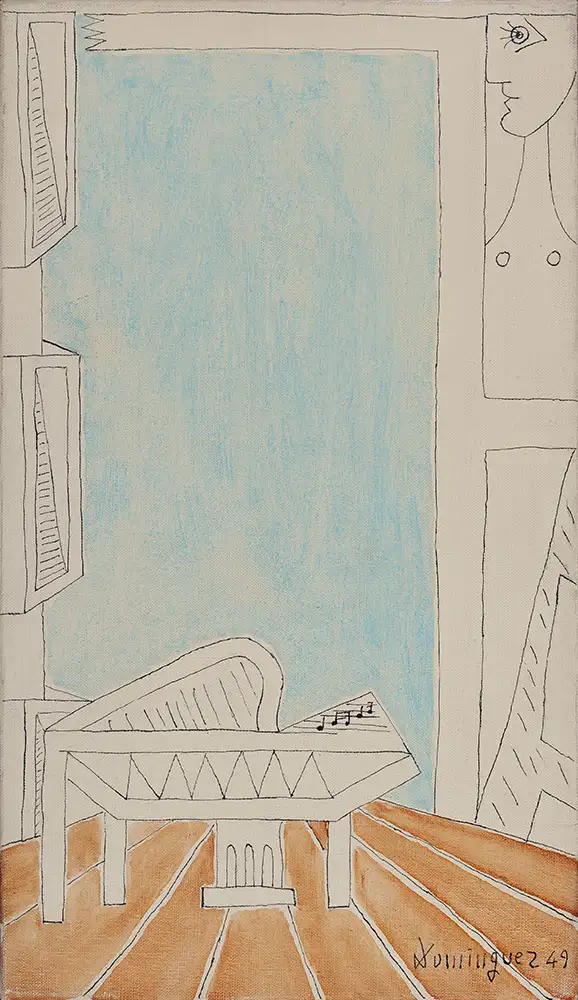
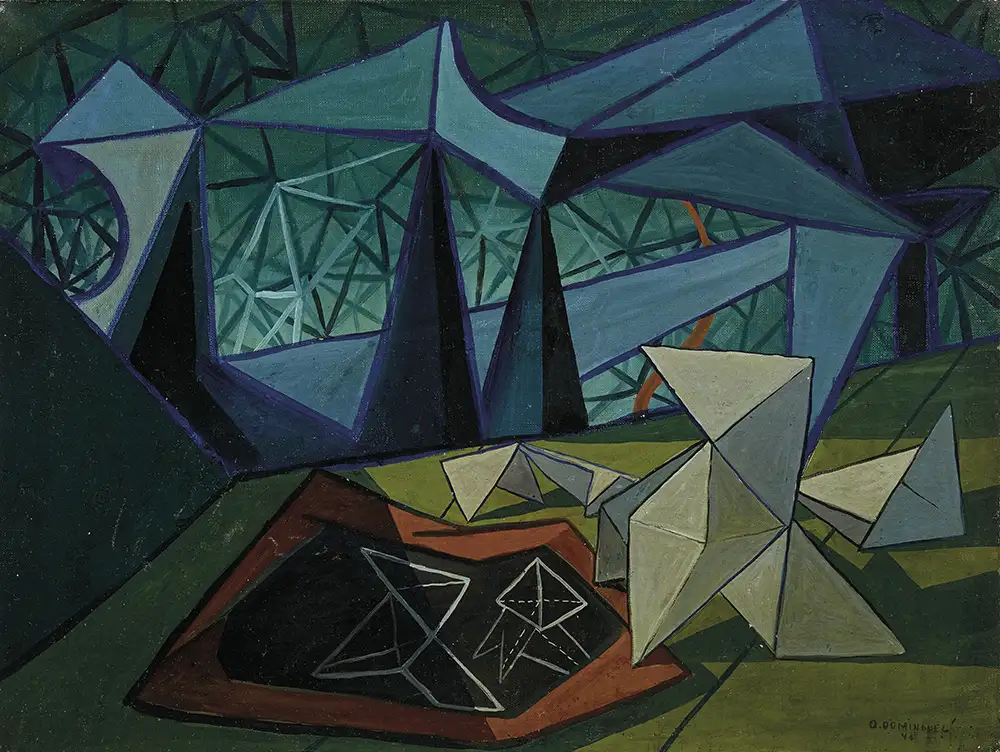
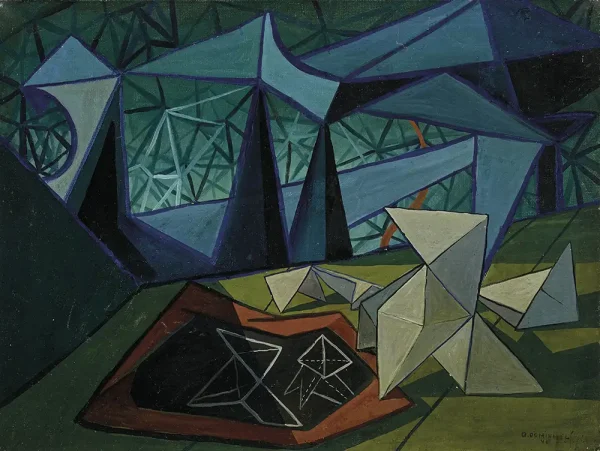
Domínguez constantly reinvented himself without confining his work to a single style, exploring a wide range of artistic approaches. Two important works from 1943 stand out in the exhibition: the painting-object Camera Obscura and Les Cocottes en papier. The Ateliers series reveals his interest in the creative process itself, with the studio serving as the epitome of the artist’s place of creation. His constant search for new forms makes him an unpredictable artist, as can be clearly seen in the formal subversion of Frutero Come Frutas (1949), a work that once belonged to André Breton. As Breton himself noted in Trajectoire du Rêve (1937), painting was Domínguez’s principal source of solace.
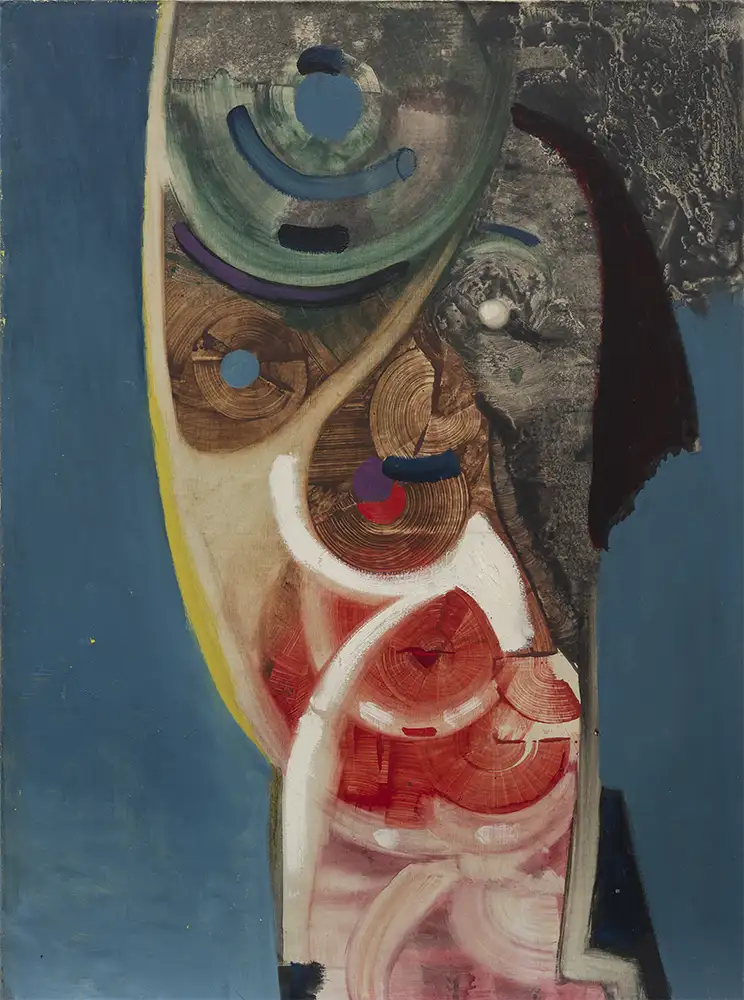
Finally, the exhibition culminates with three works from a later period in which the artist returned to the decalcomanías, using the technique experimentally and pushing it towards abstraction. The work Le Clown closes the exhibition. This painting, whose whereabouts had been unknown since it was last exhibited in 1965, has been brought to light again for this exhibition. It is considered Domínguez’ final painting: a self-portrait that reveals the ironic gaze he turned upon himself. The artist took his own life on 31 December 1957.